
Gerät
LMM-3D-Drucker: Hammer Lab35
Das LMM-Verfahren (Lithography-based Metal Manufacturing) zeichnet sich durch die Formgebung durch Photopolymerisation einer Mischung aus lichtempfindlichem Harz und Metallpulver aus. Durch das Licht ist die Laminierung extrem stabil und kann hochpräzise und kleine Komponenten realisieren.
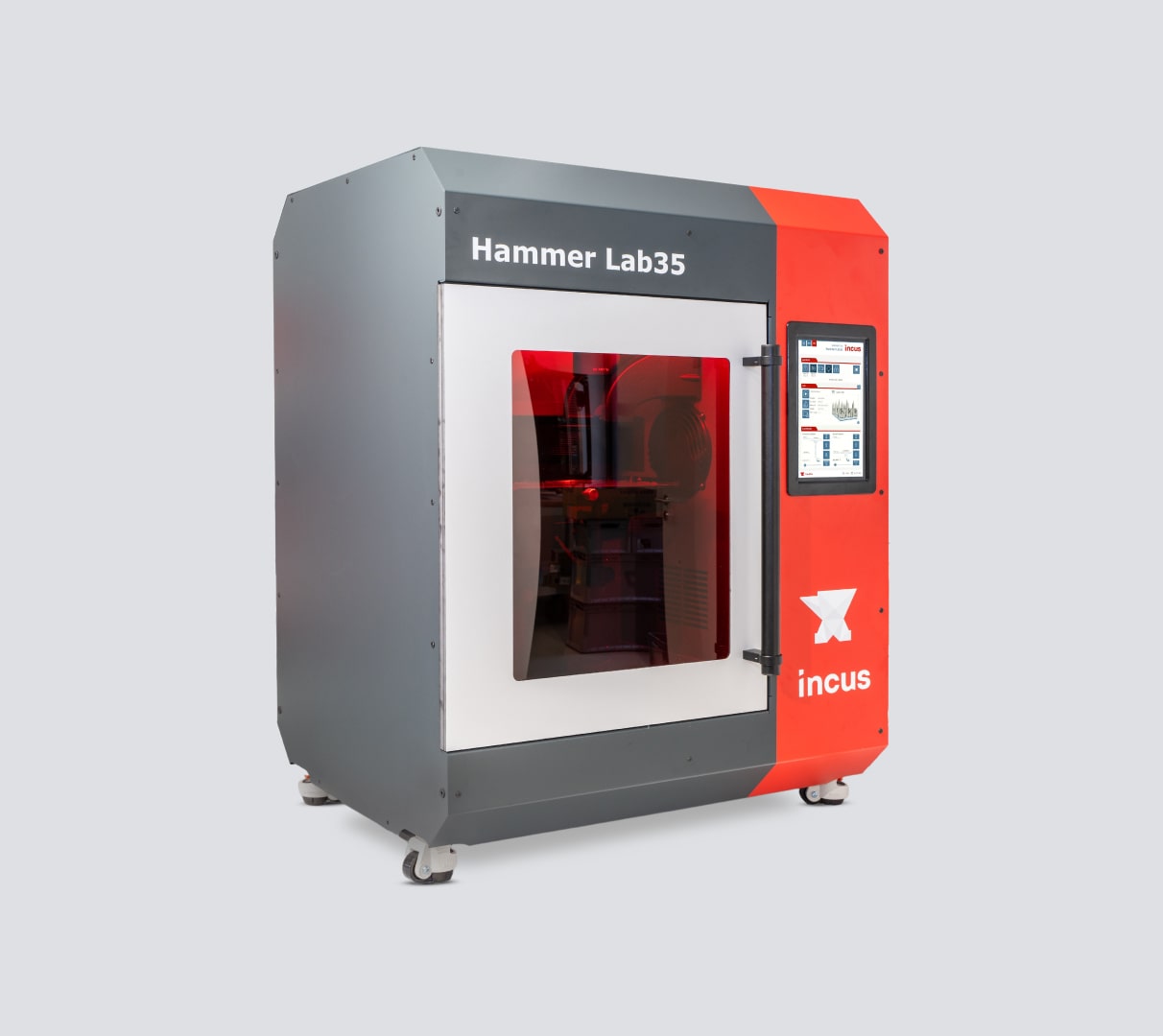
Maschinenparameter des Hammer Lab35
Hergestellt von
Incus GmbH
Laterale Auflösung
35 / 15 μm (angepasst)
Anzahl der Pixel (X, Y)
2560 x 1600
Bauvolumen (X, Y, Z)
89,6 x 56 x 120 mm
Schichtdicke
10 - 100 μm
Bauraum
Volle Klimakontrolle
Baugeschwindigkeit
Bis zu 250 Schichten/h
Druckgeschwindigkeit
Bis zu 100 cm³/h
3D-Druckverfahren
In the LMM method of 3D printing, the following process is used for modeling.
First, CAM data is created from 3D CAD data, and the 3D printer is used for modeling. After that, the workpiece is melted except for the hardened part by photo-polymerization, and then a workpiece made of metallic powder and photosensitive resin is obtained. At this stage, the metal powder is still unstable because the density of the metal powder is not high and there is an extra material called resin (this state is also called a green body).
The obtained workpiece is "dewaxed and sintered" in the next process. At this stage, the resin material is melted and volatilized (degreased), and the remaining metal powders are agglomerated and sintered. In the LMM method (and the binder jet method), this sintering process is an important process that determines the quality of the final part, and knowledge and know-how related to sintering are important. Through a carefully controlled dewaxing and sintering process, the density of the final metal part is increased to 98% or more, and the surface is finished to a level that allows mirror-finishing.
In summary, the LMM method uses light to form a green body from a mixture of photosensitive resin and metal powder through photo-polymerization, and after dewaxing and sintering, produces the same metal modeling as the MIM method. The advantage of this method is that the material and sintering technologies of μ-MIM can be deployed directly, which is useful for verification. Since light is used, stacking is extremely stable and part accuracy of ±0.2% or less is possible. In addition, since the workpiece can be removed after molding without applying force, it is possible to mold delicate and complex shapes. As a result, quality comparable to μ-MIM can be achieved.
First, CAM data is created from 3D CAD data, and the 3D printer is used for modeling. After that, the workpiece is melted except for the hardened part by photo-polymerization, and then a workpiece made of metallic powder and photosensitive resin is obtained. At this stage, the metal powder is still unstable because the density of the metal powder is not high and there is an extra material called resin (this state is also called a green body).
The obtained workpiece is "dewaxed and sintered" in the next process. At this stage, the resin material is melted and volatilized (degreased), and the remaining metal powders are agglomerated and sintered. In the LMM method (and the binder jet method), this sintering process is an important process that determines the quality of the final part, and knowledge and know-how related to sintering are important. Through a carefully controlled dewaxing and sintering process, the density of the final metal part is increased to 98% or more, and the surface is finished to a level that allows mirror-finishing.
In summary, the LMM method uses light to form a green body from a mixture of photosensitive resin and metal powder through photo-polymerization, and after dewaxing and sintering, produces the same metal modeling as the MIM method. The advantage of this method is that the material and sintering technologies of μ-MIM can be deployed directly, which is useful for verification. Since light is used, stacking is extremely stable and part accuracy of ±0.2% or less is possible. In addition, since the workpiece can be removed after molding without applying force, it is possible to mold delicate and complex shapes. As a result, quality comparable to μ-MIM can be achieved.

Vorteile von LMM

Drucken komplex geformter Komponenten
It is possible to print microscopic and complex shaped parts with a quality close to that of μ-MIM.

Nutzung der gleichen Ausrüstung und Technologie
Dieselben Geräte und Technologien, die in der μ-MIM-Technologie eingesetzt werden, können auch für dieses Verfahren verwendet werden.

Erreichen einer sehr hohen Präzision für Komponenten
Mit dieser Methode sind Toleranzen von weniger als 0,2 % möglich.
Collaboration between 3D Printing and μ-MIM
One of the barriers to the use of μ-MIM in the past was the lead time and cost during prototyping and small lot production. Now, with the addition of metal 3D printing equivalent to μ-MIM as an option for our customers, we can support you right from the prototype and small lot production stage - not only with MIM technology, but also as a partner for micro and complex shaped metal components.


Werfen Sie einen Blick auf einige mit 3D-Druck hergestellte Komponenten
Material
Größe
Zahnrad
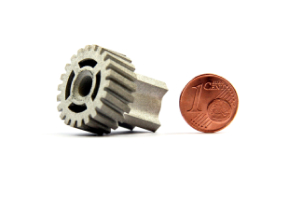
Rostfreier Stahl
φ15mm
Düse
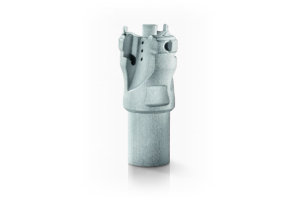
Titanlegierung
φ10×30mm
Vereinbaren Sie ein kostenloses Erstgespräch mit einem unserer Experten
Wir beantworten gerne Ihre offenen Fragen und zeigen Ihnen, wie wir Sie bei der Bewältigung Ihrer technischen Herausforderungen unterstützen können.